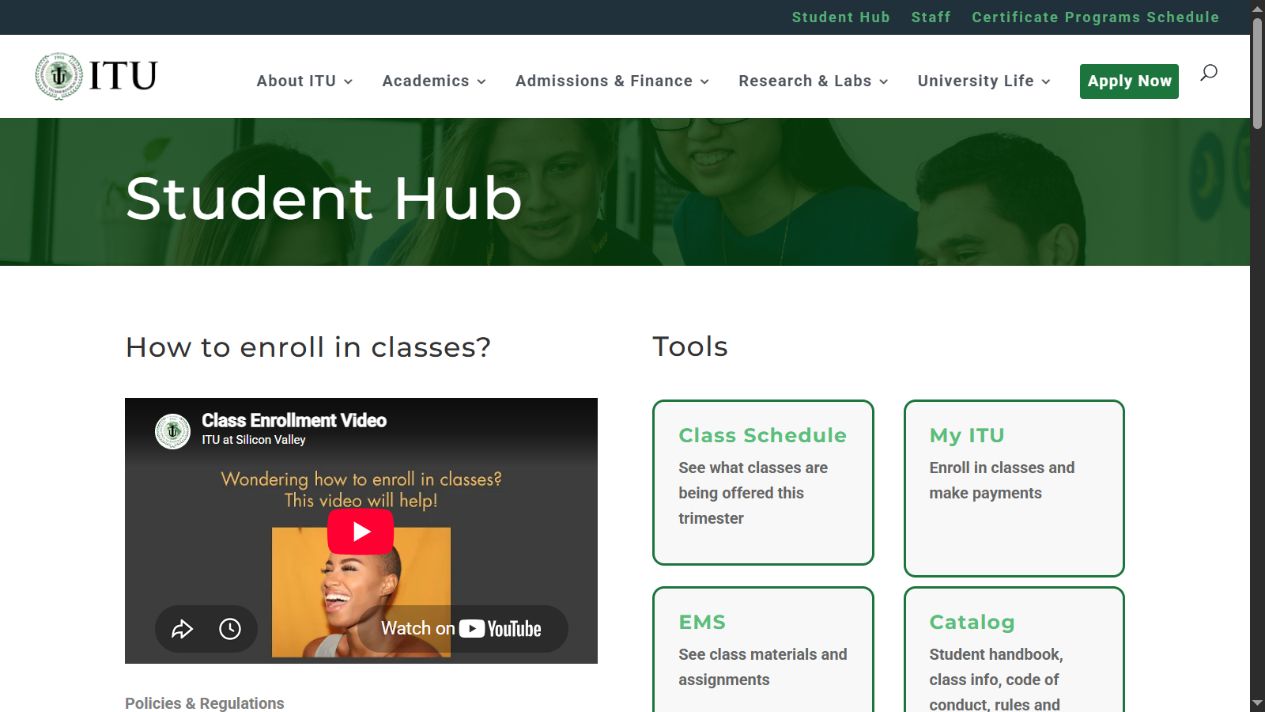
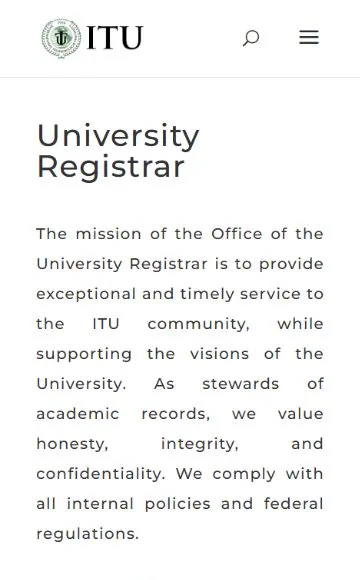
As IT Designer & Developer and Student Body President, I connected student discovery to information architecture, responsive frontend and CMS changes, accessibility, coordination, and maintenance. UX decisions continued into implementation across Academic, Admissions, Student Body and Student Services, and IT functions.
Research became implementable requirements
Interviews, surveys, usability review, personas, journey mapping, and student/stakeholder input exposed fragmented information and administrative handoffs. Requirements: group related content, clarify navigation, prioritize small screens, and route inquiries clearly. No participant count or study methodology is published.
Information architecture organized around student intent
I mapped academic information, admissions, student services, international-student information, and IT support into task paths that respected institutional ownership without making students decode it before finding help.
UX decisions continued into the frontend
My contribution continued through Figma, HTML, CSS, JavaScript, responsive layouts, navigation changes, CMS content, and refinement. Navigation hierarchy shaped responsive behavior; content groups became reusable page structure; accessibility priorities informed semantics, focus, readability, and reflow.
Across desktop, tablet, and mobile, the primary task and destination moved ahead of secondary context instead of compressing the desktop layout. The interactive explanation above makes that decision inspectable with verified current ITU labels, without presenting it as historical ITU UI.
Accessibility and content operations were product constraints
Semantic structure, keyboard access, visible focus, readable hierarchy, and reflow were implementation priorities, not a certification claim. CMS work and maintenance kept institutional content usable.
Outcomes stayed tied to ITU
The work contributed to a 50% engagement increase and 40% reduction in administrative workload in the ITU context. These outcomes remain separate from reconstructed UI; their period, baseline, and methodology are not publicly documented.
Ownership, coordination, and tradeoffs
I owned research synthesis, information architecture, frontend and CMS implementation, accessibility-informed refinement, and maintenance. Student leadership supplied context while I coordinated with institutional teams; engineering remained the center of the work.
Evidence and next validation
The current ITU website provides organization context rather than attribution for historical screens or components. Dated captures remain labeled as current context; programmatic explanations use verified labels or neutral structural language rather than invented university data.
The next evidence step is a reviewed historical-artifact set mapped to the IA and frontend changes, plus a confirmed measurement period for the outcomes.